Image © 2026 GSMA / MWC
During Mobile World Congress Barcelona 2026, AI, global connectivity frameworks, and large-scale infrastructure solution providers commanded the conversations, but three emerging technological innovators show great promise. Specifically, IQSTEL, pureLiFi, and AGIBOT stood out for their potential advancements in three distinct and critical sectors: AI-driven telecommunications, optical wireless communications (LiFi), and embodied intelligence through humanoid robotics.
These businesses are demonstrating how the combination of specialized intelligence and alternative transmission mediums can address long-standing market inefficiencies by going beyond the industry’s customary focus on hardware scaling. This research note provides an analytical overview of these innovators, exploring how their tech stacks can unlock new telecom use cases and monetization opportunities.
The Power Of The Platform
Technology platforms are powerful. They ease deployment, ongoing operational management, and aggregate functionality while mitigating tool sprawl. One company that is adopting a platform approach in telecom is IQSTEL. The company is led by founder and chief executive Leandro Iglesias, a telecom veteran with decades of experience building international communications networks and partnerships.
I met Iglesias and his team at MWC to learn more. IQSTEL operates as a global telecom and technology platform that combines connectivity, fintech, AI services, and cybersecurity into a single, easy-to-consume, deployable construct. The company currently serves telecom clients across more than twenty countries and has outlined an ambitious growth strategy that includes acquisitions and technology integration.
IQSTEL is a company worth keeping an eye on for its ambitious efforts. The telecom market is rife with friction, and the gap between market valuation and operational performance is ripe for disruption. Over the next few years, IQSTEL may continue to surprise observers as it grows its alliances and acquisitions. The strategic partnerships they have formed over the years remain key to their success. This is evidenced by IQSTEL’s partnerships with Tier 1 carriers, including Telefónica, BT, China Mobile, Bell, Orange, Verizon, T-Mobile, and e& (formerly Etisalat Group).
Shedding Light On Connectivity
pureLiFi is another interesting company that I had the opportunity to spend time with at MWC. It is currently led by Ron Schaeffer, following the recent retirement of its former chief executive last year. At MWC, pureLiFi unveiled the latest development of its Li-Fi (Light Fidelity) technology portfolio. What is compelling about Li-Fi is its ability to enable incredibly quick, secure wireless connections by transmitting data via light in situations where traditional radio frequencies are scarce or restricted.
The company’s solutions are attracting significant interest, which is no surprise given that it recently won LifeWire’s “Best of CES 2026” award for its Bridge XC system. The idea that wireless communication can occur through light may sound futuristic, yet at MWC, pureLiFi showcased that its technology is moving closer to real-world deployment, including the Bridge XC system, Kitefin XE, and LiFi Cube solutions.
pureLiFi claims to be home to visionaries, inventors, and achievers, developing technology that could revolutionize how the world connects through an alternative wireless standard. My conversations with the company’s leadership verify that statement, given that it is the inventor and pioneer of the Li-Fi reference platform. Adoption of Li-Fi remains a hurdle, given that Wi-Fi dominates global infrastructure deployments, and large-scale Li-Fi hardware integration will take time, even as other companies develop Li-Fi solutions. Still, if Li-Fi adoption grows, pureLiFi could play a significant role in next-generation wireless connectivity. It has been a long journey, with a decade passing since pureLiFi’s LiFi-X first debuted at MWC, introduced as the world’s first Li-Fi-enabled dongle. However, it shows great promise.
The Potential of Physical AI
Robotics also played a visible role in many conversations during MWC this year. One company that stood out in that space is AGIBOT. It represents a new category of companies focusing on building embodied AI robotics, machines designed to interact with the physical world using artificial intelligence.
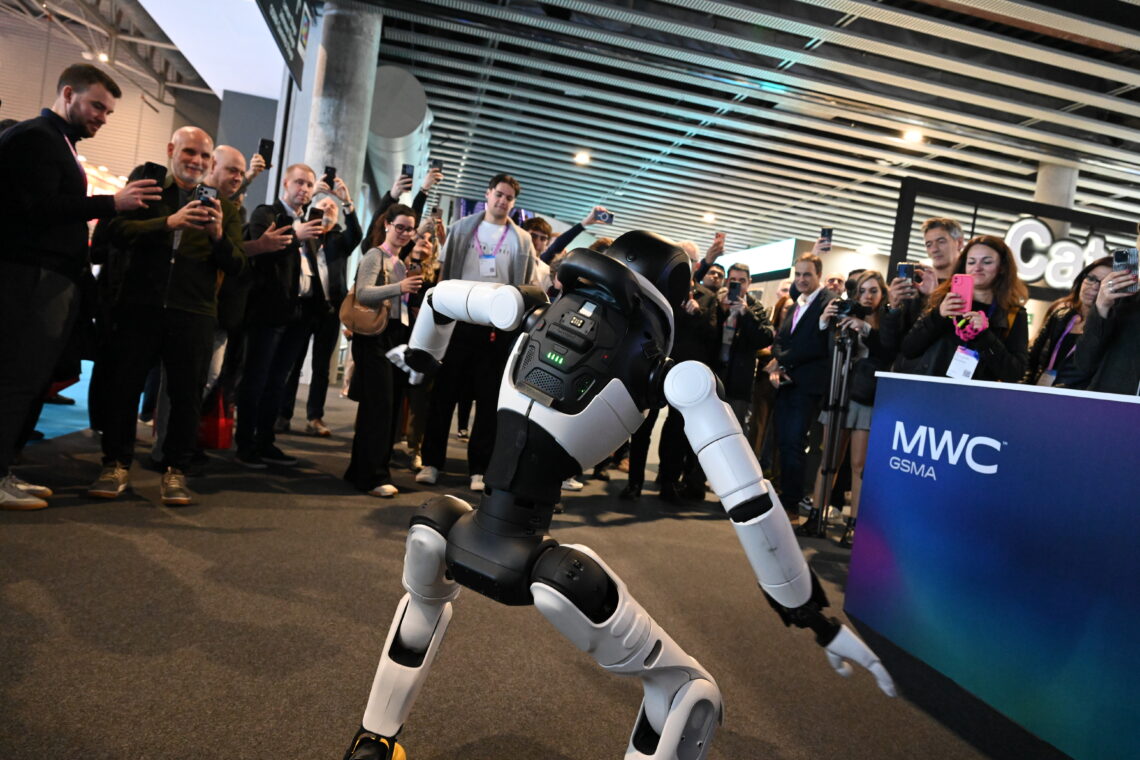
In addition to some fun dancing and tricks in its demo on the MWC show floor, the company showcased humanoid robots capable of performing tasks in logistics environments and industrial settings. This area of innovation continues to grow as industries search for new solutions to solve workforce shortages and operational efficiency challenges. However, like many other robotics startups, AGIBOT is in its preliminary stages of commercialization. Companies in this sector often attract massive venture investment once large-scale deployment becomes viable. The leadership team includes robotics engineers and AI researchers focused on building physical intelligence systems that can safely operate alongside humans.
I like what the company is doing. Robotics powered by AI could transform labor-intensive industries by offloading menial tasks and freeing up time for more value-added human-directed endeavors. The big challenge revolves around reliability and cost efficiency. Participants in this category need to demonstrate that robots can operate safely and consistently, and at a cost that businesses are willing to pay. Although I did not have the opportunity to meet with the AGIBOT leadership team at MWC this year, I did meet and share the stage with the current president of AGIBOT Europe, William Shi, just a few years ago. My recollection is that Shi is a very driven, visionary individual who should be a great asset to the company and steer its future success.
Leadership matters, and I look forward to seeing where AGIBOT heads. AI-powered robotics will not replace humans any time soon. Instead, we are seeing the emergence of intelligent machines designed to collaborate with people in environments where automation can improve safety and productivity.
Final Thoughts
These three companies share tenacity, direction, and grand ambition. Each is addressing a different part of the technology ecosystem and faces its own challenges. However, together, they underscore the importance of connectivity serving as the backbone of innovation. While AI frequently occupies the media spotlight, robust connectivity remains essential for facilitating data transfer necessary for ongoing training and inference.
Infrastructure, connectivity, and intelligent machines are merging into a single digital environment. That transformation requires a reimagination of traditional approaches and investment in long-term innovation. Companies like IQSTEL focus on expanding digital ecosystems. pureLiFi is exploring new wireless communication transmission, and AGIBOT represents the power of intelligent robotics. Keep an eye on these innovators, and it will be exciting to see what unfolds.