Mainframes are easy to overlook amid today’s focus on GPU-powered servers for generative AI and agentic frameworks. Yet these systems, which originated in the 1940s well before personal computers and distributed computing, still power billions of daily transactions for many of the world’s largest banks, credit card processors, and airlines.
I recently spent time with Broadcom’s Mainframe Software Division in Boston at its third annual analyst forum and left impressed. The team is relentlessly pursuing what is right for its customers, extending the mainframe platform’s relevance and viability, and facilitating knowledge transfer and skilling to ensure operational continuity. With a continued practice of summarizing my event attendance with three big takeaways – let’s dive in!
Customer Experience That Counts
Broadcom completed its acquisition of CA Technologies in the fall of 2018 in a nearly $20 billion all-cash transaction. The idea at the time was to diversify its portfolio with predictable, stable, recurring mainframe enterprise software revenue, and it has paid off handsomely without investing in costly research and development.
Instead, Broadcom caters to its top accounts with dedicated support, provides upgrades based on customer needs and input, and mobilizes a team of sales specialists to educate customers on existing features that can improve operational outcomes, all based on past customer success. It is an unconventional approach, but one that continues to deliver meaningful revenue and profit upside for the company.
Debunking The Legacy Perception
For many years, cloud service providers spoke of the demise of the mainframe. In its early days, mainframes were proprietary, expensive, rigid, and isolated. However, today, mainframes can connect to public clouds and modern developer operational toolsets, and utilize agentic frameworks, AI accelerators, and microservices to provide enhanced observability and hardened security.
One of the biggest advancements for the mainframe lies in leveraging open standards to scale innovation and its continued use. Through participation in the Open Mainframe Project, Broadcom is a major contributor of hardware for development and testing, provides enterprise-grade support for Zowe, an open-source framework for z/OS, and develops extensions and innovative solutions, including its Security Insights and WatchTower observability platform. Broadly speaking, these efforts are extending the mainframe’s viability as a modern piece of IT infrastructure that is optimized for high-volume workloads requiring high degrees of resilience and security.
Skilling And Vitality
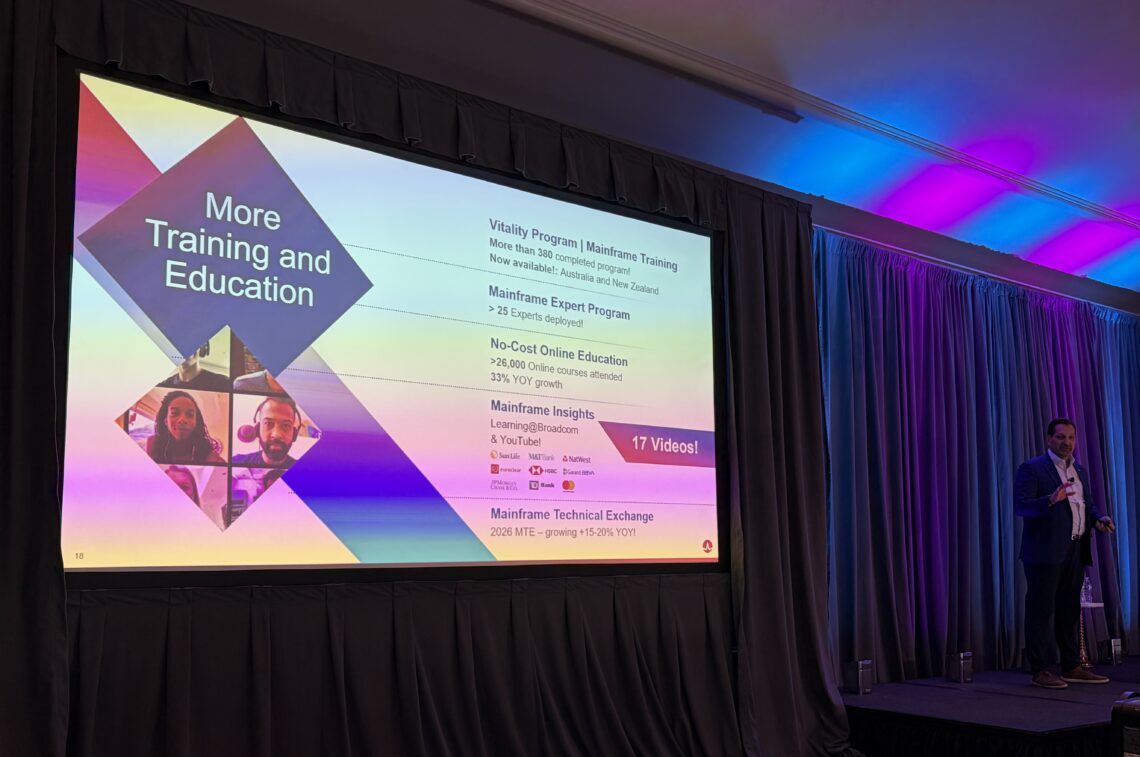
Before Broadcom’s acquisition, CA Technologies monetized its professional training services. That quickly changed, and Broadcom offers its no-cost but highly valuable training modules as a mainframe software retention mechanism. It is a brilliant strategy that creates high license renewals, and a complementary vitality program is designed to train and mentor mainframe operators. Encompassing both a six-month training course and a six-month residency, participants gain highly valuable skills, and enterprises can manage mainframe staff attrition. That’s a win-win by all measures.
Final Thoughts
Greg Lotko, who leads Broadcom’s Mainframe Software Division, likes to boast about doing more with more, not less. I like that mindset, and it is as unconventional as Broadcom’s approach to the mainframe market relative to IBM, BMC Software, and others from a go-to-market perspective. It also serves to differentiate Broadcom, creates added value, and fosters intense customer loyalty.